Art gives us so much: communication of ideas, a record of history, an appreciation of human dedication and talent, and so much more. One of my favorite gifts from art is the seed of a conversation. Already, comments on the blog have given me the chance to chew over some things I’ve never considered. This one got my wheels turning:
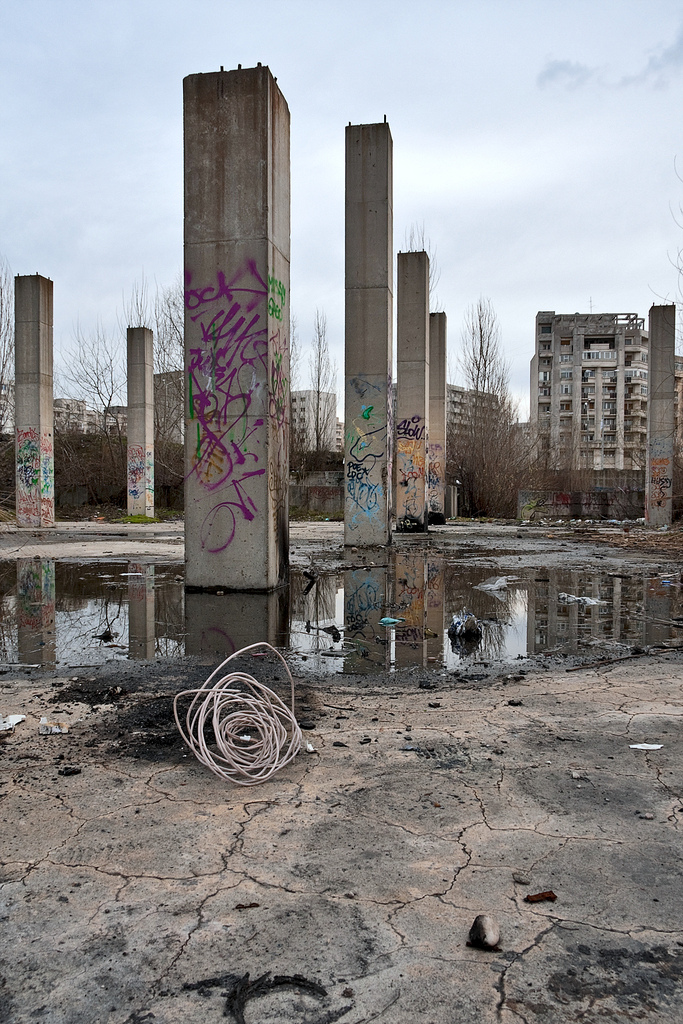
“Years ago, after hours wandering a large sculpture park in St. Louis, I came to a geometric concrete piece that captured my imagination. It was a study in solid/void, a monument of woven concrete. Surely the artist was celebrating our rational brain and dominance over cement and rock by presenting this work that managed to look heavy and airy at the same time. Light filtered through it for wonderful effect, and nature was creeping in around the edges challenging the artist’s hubris. And stepping back it resembled….a stack of unused concrete parking lot bumpers. No artist. No intended message. But in the right frame of mind, I saw (and felt) art.”
So what if you see and feel art when none is intended? According to my personal definition (art is anything manmade where the maker is attempting to communicate), the concrete parking bumpers cannot qualify because (we guess) no message was intended. The pile of concrete was random (again, a guess), but the viewer saw it as beautiful or meaningful.
In my opinion, my friend’s experience was like seeing clouds in the shape of dinosaurs or a face in the surface of the moon. These are random events that the brain organizes into familiar patterns. It’s a real thing, and it’s called pareidolia. And while we might laugh at ourselves for seeing hidden messages in a pile of trash, pareidolia is actually a higher-level thought process our brains use to figure out our environment quickly. “What’s that shape in the shadows? A bear! Run!” So what if it turns out to be a coat rack. We didn’t get eaten by a bear, did we? Score one for pareidolia!
I also think this is where we get the phenomenon of seeing religious symbols in random patterns. Pariedolia causes our brains to interpret random stuff as organized stuff, and face-shaped stuff in particular. So when we see a random pattern of toasty buttery marks (yum!) on a grilled cheese sandwich, sometimes our brains will process them into the shape of a face. And if we are particularly religious, that face might look to us like the Virgin Mary. Is it art? Is it God? Or is it just lunch?
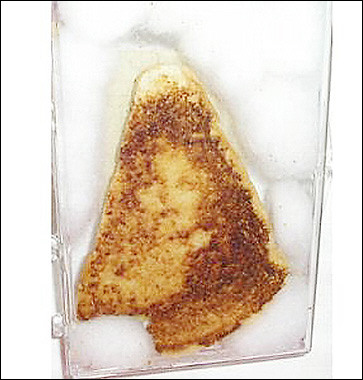
But here’s the deal. If your brain processes something as art, let it. If you see beauty in a stack of concrete, good for you. If you see Mary in a grilled cheese sandwich, I sincerely congratulate you. It means you have imagination and a sense of wonder and openness that most people lack. Enjoy those dinosaur clouds and piles of trash and don’t worry about whether they’re meaningful, as long as they mean something to you.
 Wish Y'all Were Here