My first two blog entries told you what art is (any manmade object where the maker is trying to communicate something) and why it matters (because it’s a visual record of human history). But what about style? Let’s start with a comparison. Pablo Picasso’s Guernica is one of my favorite works. It passionately conveys a universal truth and its style appeals to me. Peter Paul Rubens’s Consequences of War presents the same subject matter in a very different way.
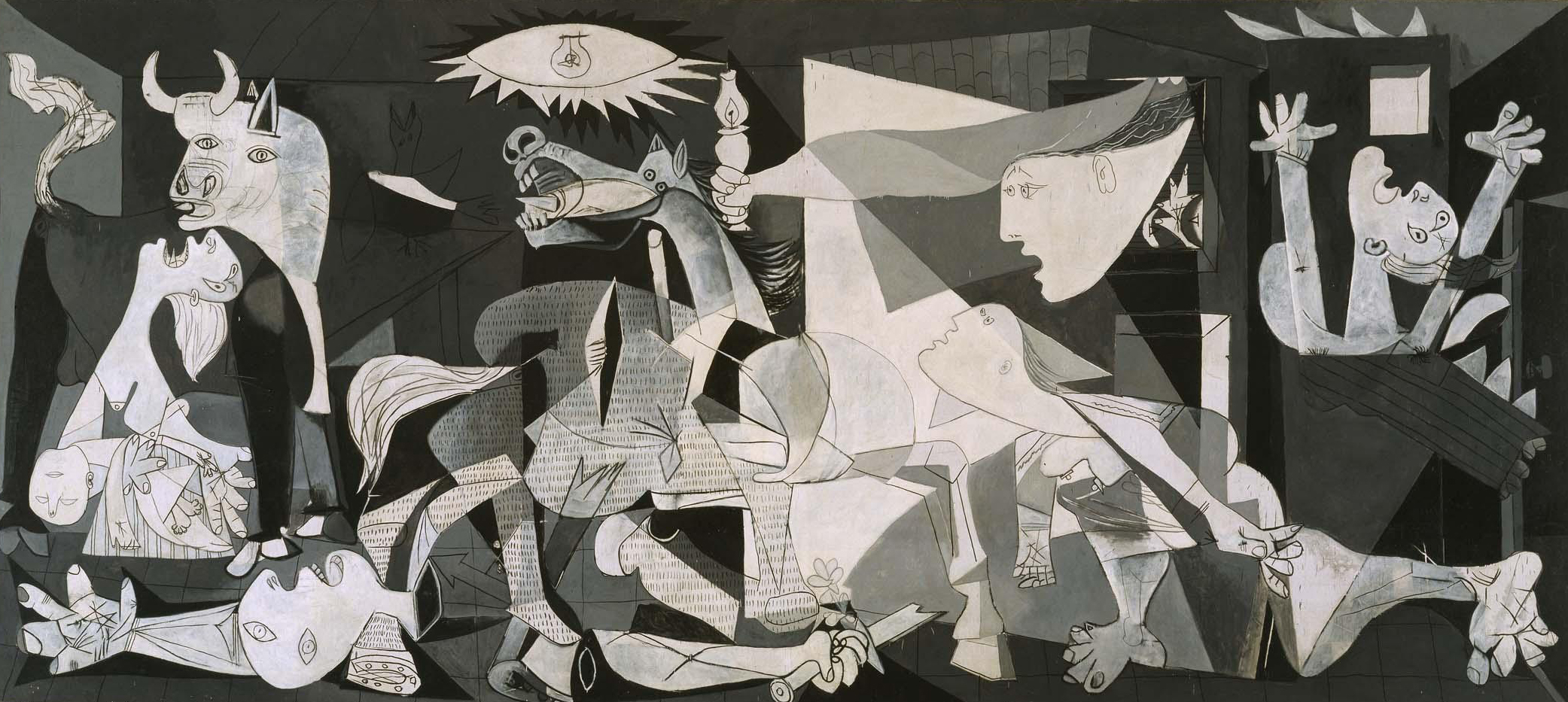
Guernica is mural-sized painting (11 ft. by 25.6 ft.) that hangs in Madrid. At first, its jarring shapes and roughly drawn human and animal figures look like the drawings of a bright, if very dramatic child, but that’s the point. The enormous mural is Picasso’s response to the bombing of Guernica, Spain (his home country), by Nazi forces in 1937 during the Spanish Civil War. Picasso wanted to share his idea of how the chaos of war felt to innocent people. He used a childlike style to show us a nightmare of a screaming horse, a dead baby, and a house on fire. The nearly black-and-white color scheme highlights its dreamlike feel. Its enormous size is meant to overwhelm and disturb the viewer.
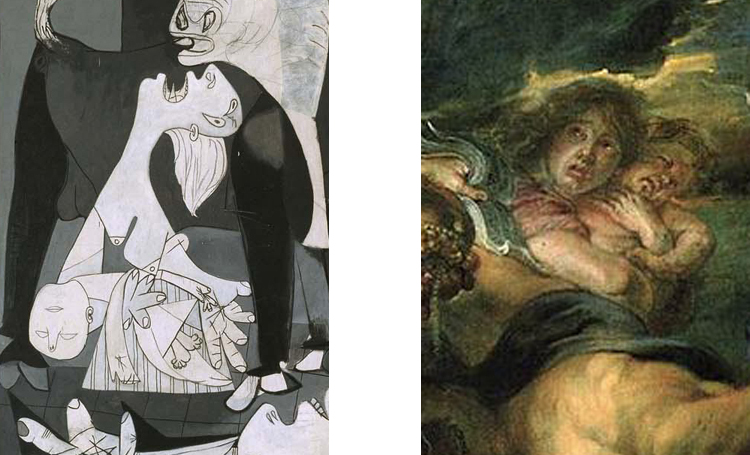
And if you’re face-to-face with this hellish scene, how could it not disturb you? The woman on the far left, wailing and clutching her dead baby, haunts my dreams. Hardly anatomically correct, her pain could not be more real. Picasso’s life-size figure exposes the worst fear of every mother on earth and demands that we feel her pain. Guernica gives us a window into emotions that, thankfully, few of us will ever experience. For that reason it has become a monument to peace understood by people of any background who speak any language.
Those are my thoughts about why Picasso painted Guernica in such a (deceptively) simplistic style. He made his design choices because they added to the feeling he was trying to express. But what if his style doesn’t grab you?
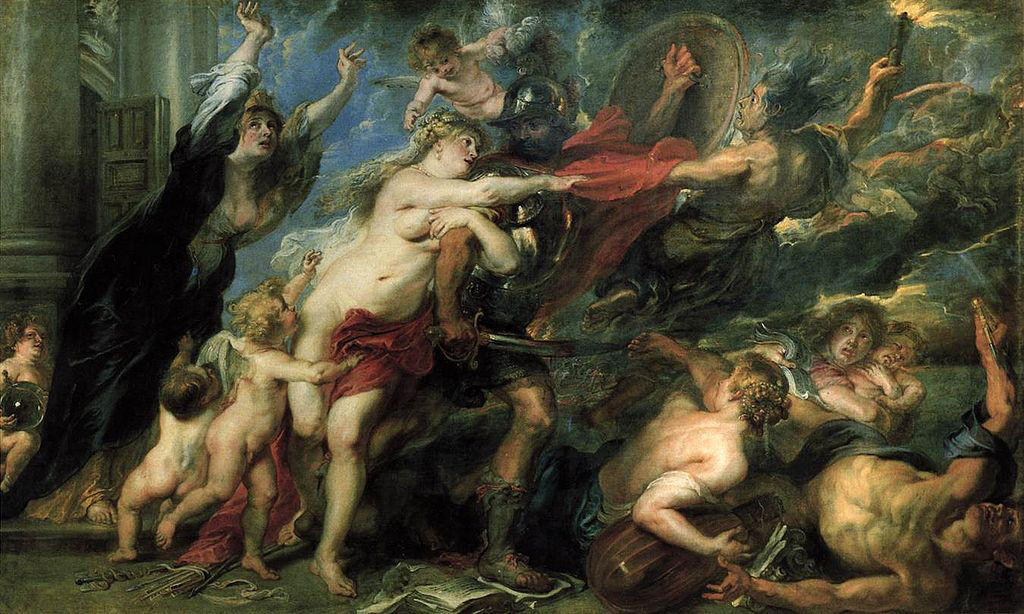
Here’s a very similar scene by Peter Paul Rubens from 1639. It’s another scene of the casualties of war, complete with a terrified mother clutching her infant. However, it’s done in the Flemish Baroque style. Its subject matter is the Thirty Years War that ravaged Europe from 1618 to 1648. His message is exactly the same as Picasso’s: War is brutal and it ruins lives of people that have nothing to do with the conflict. But he does it in a more three-dimensional, classical style that you may find more appealing.
Picasso and Rubens have painted the same subject matter in drastically different styles, but both do what I believe art must do. They make you feel something. If you want to put yourself in the shoes of someone who has been through war, your preference for one or the other is entirely up to you.
 Wish Y'all Were Here