
In my first post, I gave you my definition of art. That is, anything manmade where the maker was trying to communicate something. The next question is Why does it matter?
Art matters because history matters. (If I have to convince you that history matters, the world is doomed.) We are usually taught history through dry stories and facts that come from written documents. The problem with only viewing history that way is that up until the last few hundred years, only a small number of people could read and write. How then did people record their history and get information before reading was common?
Let’s start with the earliest known “artworks,” cave paintings from France around 25,000 years ago. I put artworks in quotes here because the people who made these paintings didn’t think of them as art. When they ground colored rocks to powder and mixed them with oil or water or blood to make paint and applied it to the wall, they weren’t making a pretty picture to match the couch. They were most likely recording a successful hunt or telling other knuckle-dragging folks where to find food. This was early human front page news! It was communication in pictures because there was no written language at the time.

By 1500, perhaps half of Europe had basic reading skills, but books were only for the very wealthy. The Bible was written out by hand and only in Latin, so the average Guiseppe wasn’t likely curl up with a copy after a long day at the blacksmith’s bench. How did he learn the stories of the Bible? It was through artwork like Michelangelo’s Sistine Chapel ceiling, completed in 1512. Once again, artwork was communication in pictures for people that couldn’t read.
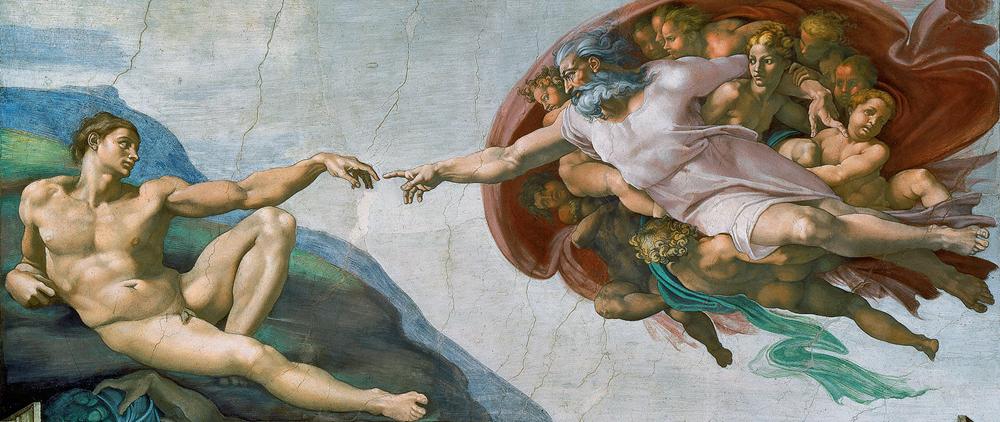
In addition to giving information to people in its own time, art gives information to future generations about what was happening at different times in history. Twenty-first century historians can look back at cave paintings and understand what was important to the people who made them: hunting and survival.
We can also look at Renaissance artwork and see what was important (religion), but we can also see how much life had changed for humans since those cave paintings. We can use Michelangelo’s murals to understand when certain minerals for making paint were discovered. We can see that society had evolved to allow enough free time and money to create a class of artists and thinkers. We can see how man viewed his place in the universe. And all this without the use of words.
This recording of history continues to the present day. Want to know when cameras were invented and were available to regular folks? Look at the paintings of the late 1800’s. They changed drastically with the popularity of cameras. How about the rise of television and advertising? Take a look at Andy Warhol’s Campbell’s Soup Cans from the 1960’s. From everyday life to important milestones, history is recorded in caves and art galleries for us to see, no reading required.
 Wish Y'all Were Here